

Recall that does not weaken as connections multiply
- Year
- 2026
- Role
- Architecture · Implementation · Test design
- Stack
- Python
- 0loss as connections multiply
- 2,594assertions · 0 failures
- 30/30version × seed · same result
Figures counted at source, August 2026.
The problem
The more you teach a system, the worse it gets at remembering. That is not an engineering mistake — it is how memory behaves, in people too. The more facts you attach to one concept, the slower and less reliable your route to any single one of them becomes. Psychology has a name for it: the fan effect. Attention is divided across the links, and the fiftieth connection weakens the first.
Anyone using AI tools today meets a version of this: the more context you give an assistant, the more its answers drift. The hard part is not storing what it knows — it is reaching what it knows with the same accuracy after the pile has grown.
Approach
Nous is built as a memory fabric rather than a memory store. Nothing sits in a list: every item is a node, every relationship between them is an edge, and every edge carries both a type and a strength. Remembering something means exciting one point in that fabric and watching the excitation travel.
This is where the decisive choice sits. As excitation travels it is not divided: every road out of a node carries the source's full activation — no split across out-edges, no per-node budget. The consequence in one sentence: however many connections you add to a node, the ones already there do not get weaker.
- Relationships carry a type and a strength — not “connected” but how connected
- Recall is a spread, not a search: the right neighbours light up together
- Zero third-party dependencies — every module runs on the standard library; there is nothing to install
- Five Python versions across six randomness settings: bit-identical results in all thirty combinations
- Same input, separate processes, same output — reproducibility is a tested property, not a hoped-for one
- An independent adversarial test layer that audits the project's own tests
Outcome
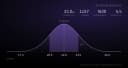
A working substrate, archived under a permanent DOI and exercised by 2,594 assertions across 26 suites with zero failures. The measured behaviour is this: recall does not weaken as the fabric fills. Between a node's second connection and its fiftieth there is no difference in the strength reaching the first — down to the last digit.
The fiftieth connection does not weaken the first.
Reproducibility gets the same treatment: five CPython versions, six randomness seeds, the same result in all thirty combinations. With not one third-party dependency, the thing producing the result can be read end to end — there is no black box to take on trust.
The limits
Refusing to state what cannot be shown is the price of being able to state what can. None of this is about consciousness, awareness or understanding, and this page makes no such claim: Nous is a memory-and-activation substrate — it neither thinks nor knows. A cognitive claim was approached three times and withdrawn three times, each time before any graded number existed, because the yardstick turned out to be either circular or impossible to produce.
A known defect is in the open too, not in a footnote. On graphs where three or more contributions meet at one node, the order of summation comes from iterating random ids, so fresh processes can disagree in the last place: 48 of them produced two results, one unit apart. It holds bit-exactly up to in-degree two, and the store itself is unaffected. The reason it is written here is simple — the project's own probes could not have seen it, an independent adversarial pass found it, and what gets found gets published.
Building something?
Say what you want built; a written proposal follows within two business days.